Forex for beginners in 2026 is best started with a structured free course and a demo account rather than paid signals
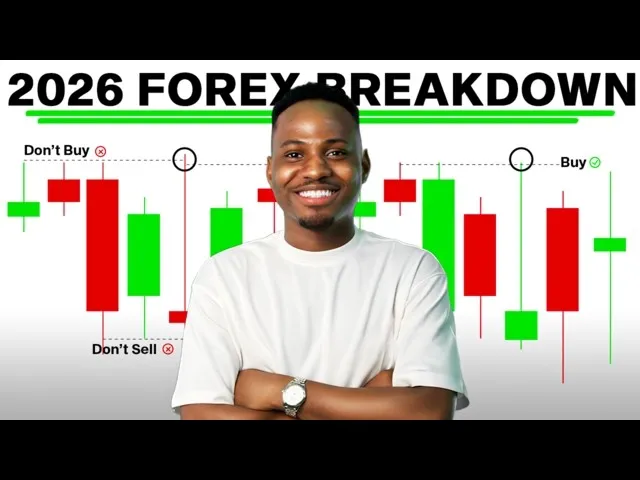
Video: How To Start Forex Trading For Beginners’ 2026 (Full Course)
You can order the same kind of articles for your own video to boost it on YouTube and Google. Just message the Telegram bot @sat_sit_bot. It writes articles around your video, embeds the video and publishes them on popular niche websites (no ads). Your first 50 articles are free.
· based on the channel Jeffrey Benson Forex
Forex for beginners is best started with a free structured course, a demo account on MetaTrader 5 and a written risk rule, not with paid signal groups. That order matters because it builds the two skills that actually decide survival — reading price and controlling position size — before real money is exposed. A daily free signal is available through the FirePips signals channel, but it works as a supplement to your own analysis, not a replacement for it.
What forex is and how the currency market actually works
Forex is the trading of one currency against another in pairs, and the price you see is simply how much of the quote currency is needed to buy one unit of the base currency. In EUR/USD, the euro is the base and the dollar is the quote, so a move from 1.0800 to 1.0850 means the euro gained 50 pips against the dollar. There is no central exchange: banks, brokers and funds trade over the counter, which is why spreads differ between brokers on the same pair at the same moment.
The market runs 24 hours a day from Monday to Friday, rolling through the Sydney, Tokyo, London and New York sessions. Liquidity is thinnest in the Asian session and deepest when London and New York overlap, so spreads on majors like EUR/USD, GBP/USD and USD/JPY are tightest in that window. Beginners usually get the cleanest fills and the fewest surprise spikes by trading that overlap rather than the dead hours.
The tools and account setup every beginner needs first
The minimum toolkit is a broker account, MetaTrader 5 and a charting platform, and each has a distinct job. MetaTrader 5 handles order entry, stop-loss and take-profit placement, and position management; TradingView handles the analysis, drawing and multi-timeframe review. Keeping analysis and execution separate stops you from clicking buttons on the same screen where you are trying to think.
- Register with a regulated broker and complete identity verification before funding anything.
- Download MetaTrader 5 for desktop and mobile, then log in with the credentials the broker issues.
- Open a demo account first and confirm you can place, modify and close a trade without help.
- Build a TradingView layout with a clean chart, a higher timeframe for direction and a lower timeframe for entries.
- Only fund a live account once demo results are consistent over at least a few dozen trades.
A practical note from the review: the course creator routes students to his own broker partner and a step-by-step MT5 linking guide, which is convenient but should never override your own check of regulation, spreads and withdrawal terms.
Bid, ask, spread, lots and leverage explained without jargon
Every quote has two prices, and the gap between them is a cost you pay on entry. The bid is what buyers offer and the ask is what sellers want; the spread is ask minus bid. On a raw account, EUR/USD might show a spread of 0.1–0.3 pips plus commission, while a standard account might show 1.0–1.5 pips with no commission — the total cost is what matters, not the headline number.
Lot size converts pips into money. A standard lot is 100,000 units, a mini lot is 10,000 and a micro lot is 1,000. On EUR/USD, one pip on a standard lot is roughly $10, on a mini lot about $1 and on a micro lot about $0.10. That single relationship explains why two traders with the same strategy and the same account balance can end up with completely different results.
Leverage is a loan from the broker that reduces the margin you must post. At 1:100, a $1,000 position needs about $10 of margin; at 1:500 it needs about $2. Leverage does not change the size of a pip, it changes how many positions you can hold and how quickly a losing trade can consume your balance. Margin is the collateral locked while the trade is open, and a margin call happens when equity falls below the required level.
Risk management that protects capital before it protects profits
Risk management is the rule set that decides how much you can lose on a single idea, and it should be written down before the first live trade. A common beginner framework is risking 0.5–1% of account equity per position, with the stop-loss placed at a technical level rather than at a round dollar amount. If the stop is far away, the lot size shrinks; if the stop is close, the lot size can grow. The dollar risk stays constant either way.
This is also why a trader can win less than half of their trades and still be profitable. With a 1:2 risk-to-reward ratio, a 40% win rate produces a positive expectancy, while a 90% win rate with occasional oversized losses can still end the account. The video's emphasis on capital protection before profit targets matches what most experienced traders say: survival first, compounding second.
Reading charts with support, resistance and timeframe alignment
Technical analysis in forex is mostly about identifying where price has reacted before and trading around those levels. Support is a zone where buyers previously stepped in, resistance is a zone where sellers previously stepped in, and the more times a level has been tested and respected, the more attention it deserves. Draw them on the higher timeframe first, then drop to a lower timeframe for entries.
Trader types map to timeframes: scalpers hold seconds to minutes on 1-minute and 5-minute charts, day traders close within the session on 15-minute and 1-hour charts, swing traders hold days to weeks on 4-hour and daily charts. Beginners generally do better on higher timeframes because spreads and noise take a smaller share of each move. Fundamental analysis — interest rates, inflation prints, central bank decisions — explains the broader direction, while technicals time the entry.
Placing a first trade with entry, stop-loss and take-profit
A complete trade has three prices before you click buy or sell, and skipping any of them turns trading into gambling. Entry is where you want to be filled, stop-loss is where the idea is proven wrong, and take-profit is where you take the reward. On MetaTrader 5, open the order window, set the volume in lots, type the stop-loss and take-profit levels, and confirm the risk in currency before sending the order.
After execution, manage the position deliberately: move to break-even only when structure justifies it, never widen a stop-loss to avoid a loss, and avoid stacking correlated trades that all express the same dollar view. If the setup is invalidated before entry, cancel the order — a missed trade costs nothing.
Common beginner mistakes and the psychology behind them
Most beginner losses come from behaviour, not from a lack of indicators. Overleveraging, revenge trading after a loss, moving stop-losses, jumping between strategies every week and trading without a journal are the recurring patterns. A journal with entry reason, screenshot, risk in dollars and emotional state turns those patterns into visible data within a month.
A second trap is expecting every trade to win. No strategy wins all the time, and the traders who last are the ones who accept small losses quickly and let the occasional large winner run. Patience and discipline are not motivational slogans here — they are the difference between a repeatable process and a random series of bets.
Questions beginners keep asking about getting started
One recurring concern is whether a beginner can learn from a free course at all, and the answer is yes, provided the material covers mechanics, risk and execution rather than only entry signals. Another is age and background: several viewers note they are starting later in life or with no finance experience, and the same path works — demo first, small size later, journal throughout.
A third is whether copying someone else's trades is a shortcut. Copying can teach order placement and trade management, but it does not build the judgment needed when the signal provider is wrong or unavailable, so treat it as training wheels rather than a destination. The final common question is about time: most beginners need weeks of demo screen time before live results mean anything.
Useful links
- Free daily signal channel: https://t.me/firepipsignals
- Broker registration used in the course: https://my.assexmarkets.com/auth/register?partner_code=1699134
- Premium signal group subscription bot: https://t.me/jeffreybenzhelpbot
- Student plans: https://firepipsfx.com/plans
- Support channel: https://t.me/jeffreybenzhelpbo
Bottom line on starting forex the right way
Forex rewards process over prediction, and the fastest route for a beginner is a structured free course, a demo account on MetaTrader 5, a written risk limit and a journal kept from trade one. The framework covered here — pairs, spreads, lot size, leverage, support and resistance, and stop-loss discipline — is enough to place a first deliberate trade instead of a random one. This breakdown is based on the full beginner course published by the Jeffrey Benson Forex channel, which walks through setup, strategy and psychology in one sitting. Start with the free daily signal channel to watch how setups are framed, and keep your own risk rules in charge of every position.
Key takeaways
- Forex is an over-the-counter currency market open 24 hours a day, five days a week, with the highest liquidity during the London and New York sessions.
- MetaTrader 5 and TradingView are the two core tools: MT5 for execution and order management, TradingView for chart analysis and support/resistance marking.
- A standard lot is 100,000 units of base currency; a 0.01 lot (micro) moves about $0.10 per pip on most USD-quoted pairs.
- Leverage multiplies both profit and loss and ties up margin, so position size and stop-loss distance matter more than the leverage number itself.
- A beginner should journal every trade and risk a small fixed percentage of capital per position instead of chasing a high win rate.
Questions & answers
Can I really learn forex from a free YouTube course?
Yes, if the course covers mechanics, risk management and live execution rather than only entry signals. A free full course is a solid foundation, but it must be paired with demo practice and a trading journal before real money is used.
How much money do I need to start forex trading?
You can open many accounts with a few hundred dollars, but the amount matters less than position size relative to it. Trading micro lots and risking 0.5–1% per trade keeps risk controlled even on a small balance.
Is copying signals a good way to start as a beginner?
Copying trades can help you learn order placement and trade management, but it does not build independent judgment. Use it alongside your own chart study so you understand why a trade exists, not just where to click.
How long does it take before a beginner becomes consistent?
Most beginners need weeks to months of demo screen time plus a few dozen journaled trades before results mean anything. Consistency comes from a fixed process and stable risk, not from a single winning streak.
Source: How To Start Forex Trading For Beginners’ 2026 (Full Course) · Markdown version